
Why Solar Panels Fail Early (And How to Prevent Efficiency Loss)
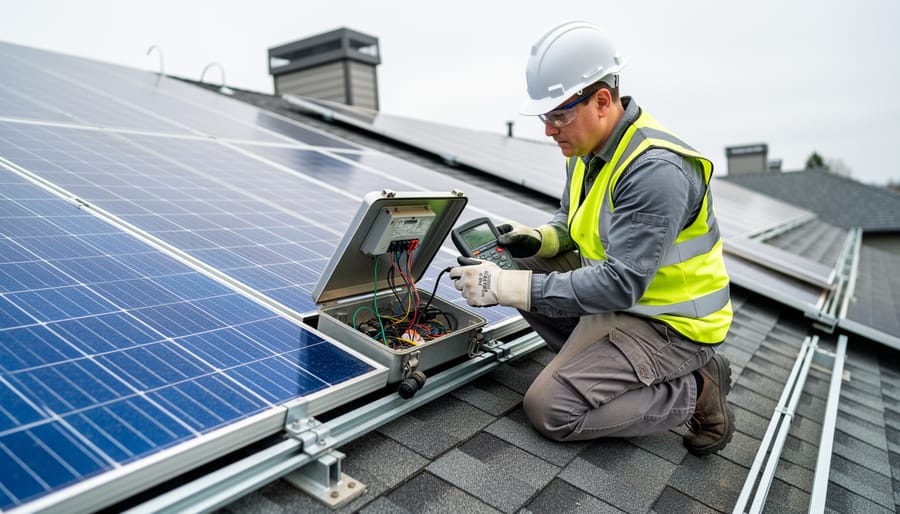
Maximize solar panel output by scheduling biannual professional inspections that identify micro-cracks, hotspots, and connection degradation before they cascade into system failures. Industry data from 2026 shows that proactive maintenance prevents up to 40% of common efficiency losses, particularly in regions with extreme temperature fluctuations or high particulate exposure.
Install arc-fault circuit interrupters (AFCIs) and rapid shutdown devices on all new and retrofit installations to meet current NEC 2026 standards. These safety mechanisms detect electrical arcing within milliseconds and automatically de-energize systems, eliminating the primary ignition source for rooftop fires. Compliance has become non-negotiable for insurance coverage, especially for homeowners considering selling an inherited house with existing solar infrastructure.
Monitor inverter performance metrics weekly through manufacturer apps or third-party platforms that track string-level production data. Sudden drops of 15% or more signal immediate problems requiring professional assessment, from shading issues to internal component failure. Real-time monitoring has proven essential for warranty claims and prevents minor degradation from evolving into catastrophic equipment loss.
Coordinate solar maintenance with complementary home safety systems, since rooftop access for panel cleaning creates opportunities to inspect adjacent infrastructure. Professional service providers like dryerventcleanexperts.com can integrate fire risk assessments across multiple building systems during scheduled visits, reducing overall inspection costs while improving household safety profiles.
The convergence of efficiency optimization and hazard mitigation defines modern solar asset management. Systems operating at peak performance don’t just generate maximum returns; they fundamentally reduce thermal stress, electrical faults, and structural risks that compromise both equipment longevity and occupant safety.
The Current State of Residential Solar Performance
Residential solar installations surged past 4.2 million systems in the United States alone by early 2026, with global residential capacity exceeding 180 gigawatts. The typical home system now ranges from 7 to 10 kilowatts, substantially larger than the 5-kilowatt average common just five years ago. This expansion reflects both declining equipment costs and increased energy consumption as households electrify heating and transportation.
However, field studies reveal a persistent disconnect between laboratory performance claims and actual energy generation. While manufacturers often cite efficiency ratings tested under standard conditions, real-world installations face variables that laboratory settings cannot replicate. A comprehensive panel quality comparison across markets shows performance variations of 15 to 25 percent between identical models installed in different environments.
| Panel Technology | Manufacturer Rated Efficiency | Average Field Performance | Performance Gap |
|---|---|---|---|
| Monocrystalline | 21-23% | 18-20% | 3-4% |
| Polycrystalline | 17-19% | 14-16% | 3-4% |
| Thin-Film | 13-16% | 11-14% | 2-3% |
The performance gap stems from multiple factors including temperature coefficients, spectral mismatch between laboratory light sources and natural sunlight, and degradation that begins immediately upon installation. Monitoring data from systems commissioned in 2024 and 2025 indicates first-year degradation rates averaging 2 to 3 percent, significantly higher than the 0.5 percent annual decline most warranties assume.
Regional adoption patterns also shape performance expectations. Desert installations in the southwestern United States achieve capacity factors approaching 25 percent, while systems in cloudier northern climates often struggle to reach 15 percent. These geographic disparities underscore the importance of site-specific performance modeling rather than relying solely on nameplate ratings when evaluating system economics and expected energy production.
Primary Causes of Solar Energy Efficiency Loss
Environmental and Material Degradation
Solar panels face relentless environmental assault from the moment of installation. Weather exposure initiates a gradual but measurable decline in photovoltaic performance, with most crystalline silicon modules losing 0.5% to 1% of their rated capacity annually under normal conditions. This degradation accelerates in regions with extreme temperature swings, high humidity, or intense UV exposure.
UV radiation breaks down the encapsulant materials protecting solar cells, particularly ethylene-vinyl acetate (EVA) layers. Over time, this photochemical reaction causes discoloration and delamination, reducing light transmission to the cells beneath. Field studies from desert installations in 2026 reveal that panels operating at sustained temperatures above 85°C experience degradation rates nearly double those in moderate climates. Each degree above 25°C typically reduces instantaneous efficiency by 0.4% to 0.5%, while repeated thermal cycling stresses solder joints and interconnects.
Potential-induced degradation represents a particularly insidious efficiency killer. PID occurs when voltage differences between solar cells and their grounded frames create ion migration within the module, effectively shunting cells and reducing power output by 30% or more in severe cases. Systems operating at high voltages in humid environments face elevated PID risk, though anti-PID coatings and modified cell designs introduced in recent years have mitigated this threat.
Light-induced degradation typically manifests within the first 48 hours of operation as boron-oxygen complexes form in p-type silicon wafers. Modern cells incorporate compensating dopants to limit LID to 1% to 3% initial losses. Manufacturing defects, from microcracks invisible during installation to cell mismatches within modules, compound these environmental stresses. Quality control variations between manufacturers produce wide performance spreads even among panels with identical nameplate ratings.
Installation and Design Deficiencies
Installation errors account for 15-30% of residential solar efficiency losses in 2026, according to field audits across North America, Europe, and Asia-Pacific markets. Unlike gradual material degradation, design and installation deficiencies immediately cap system performance, often going undetected until homeowners notice unexpectedly low energy production months or years after commissioning.
Mounting angle miscalculations represent the most widespread error. Panels installed at suboptimal tilt angles, frequently defaulting to roof pitch rather than calculating the ideal angle for latitude and seasonal sun paths, can reduce annual energy capture by 8-20%. In southern hemisphere markets, installers trained primarily in northern markets sometimes mirror angle specifications incorrectly, compounding the problem. Azimuth orientation matters equally: panels facing 30 degrees off true south (or north in southern latitudes) sacrifice approximately 5% efficiency, yet rushed installations frequently prioritize aesthetic symmetry over optimal positioning.
Shading analysis failures plague both residential and commercial installations. Pre-installation surveys that rely on single-point-in-time observations miss seasonal shading variations from deciduous trees, neighboring structures, and even the homeowner’s own roof features like chimneys and vents. Partial shading on a single panel can reduce string output by 40-70% when bypass diodes fail or are improperly configured. Module-level power electronics mitigate this issue but are often specified incorrectly or omitted to reduce costs.
Industry data reveals the most common installation errors impacting long-term efficiency:
- Inverter undersizing or oversizing relative to array capacity, reducing conversion efficiency or wasting potential output
- Series string configurations that ignore manufacturer voltage and current specifications, causing chronic underperformance
- Cable runs exceeding recommended lengths without adequate wire gauge adjustments, increasing resistive losses
- Improper DC connector crimping and sealing, leading to corrosion and voltage drop at connection points
- Ventilation gaps beneath panels blocked by installation debris, raising operating temperatures and reducing efficiency
Wiring deficiencies extend beyond simple sizing errors. Installers frequently mix cable types within systems, creating impedance mismatches. Ground fault detection becomes unreliable when grounding electrodes lack proper soil contact or bonding connections corrode due to dissimilar metals. European installation networks report that up to 12% of systems inspected in 2026 had torque specifications on DC terminals below manufacturer requirements, creating hot spots that accelerate insulation breakdown and fire risk.
Soiling and Maintenance Neglect
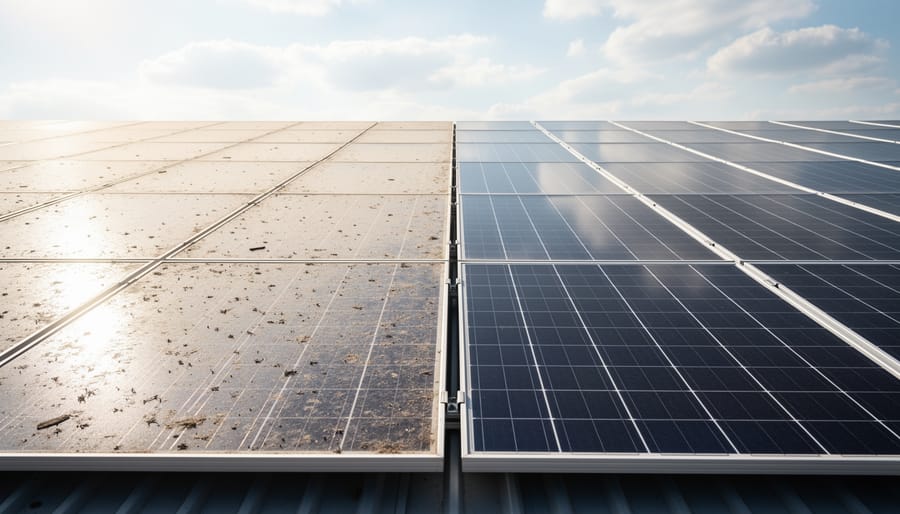
Dust accumulation and organic debris represent one of the most underestimated threats to solar energy production, yet homeowners frequently overlook routine panel cleaning in favor of more complex maintenance tasks. Field measurements across diverse climates in 2026 demonstrate that soiling alone can reduce system output by 4 to 25 percent annually, with losses varying dramatically based on local environmental conditions and precipitation patterns.
Desert and semi-arid regions experience the most severe soiling penalties. Installations in these areas require monthly cleaning during dry seasons to maintain optimal performance, as fine particulate matter creates an opaque film that blocks photon absorption. Coastal installations face different challenges, with salt spray residue and marine aerosols creating persistent efficiency losses that resist natural rainfall cleaning.
Bird droppings pose a disproportionate impact relative to their coverage area. A single dropping covering just 5 percent of a panel can reduce its entire output by 30 to 50 percent due to the series-connected cell architecture that makes the weakest link dominate performance. Agricultural areas report similar concentrated losses from pollen during growing seasons.
Regional variations in natural cleaning through rainfall create vastly different maintenance requirements. Areas receiving less than 20 inches of annual precipitation typically need quarterly professional cleaning, while wetter climates may achieve acceptable performance with semi-annual attention. However, monitoring data reveals that even in rainy regions, panels tilted below 15 degrees accumulate residue that precipitation cannot fully remove.
Critical Safety Hazards in Home Solar Systems
Electrical and Fire Risks
DC arc faults represent the most severe electrical hazard in residential solar installations, creating sustained plasma discharges that can ignite surrounding materials without triggering conventional circuit protection. Unlike AC arcs that extinguish at each zero-crossing, DC arcs from damaged cables, loose connections, or degraded junction boxes maintain continuous energy release. Field data from European safety monitoring networks in 2026 indicates that approximately 1 in 800 residential systems experiences a detectable arc fault annually, with aging installations showing substantially higher rates.
Improper grounding compounds these risks by eliminating fault current pathways that would otherwise trip protective devices. Installations lacking proper equipment grounding conductors or using inadequate bonding jumpers create conditions where metallic components can energize unexpectedly. This becomes particularly dangerous during maintenance or emergency response, when first responders may encounter electrified racking systems or module frames that appear safely de-energized.
Inverter failures manifest both as gradual performance degradation and catastrophic events involving component overheating. Thermal stress from inadequate ventilation, moisture ingress through compromised enclosures, and capacitor aging all contribute to failure modes. Recent Australian building inspections found that 12% of inverters installed before 2022 showed signs of internal arcing or thermal damage upon removal.
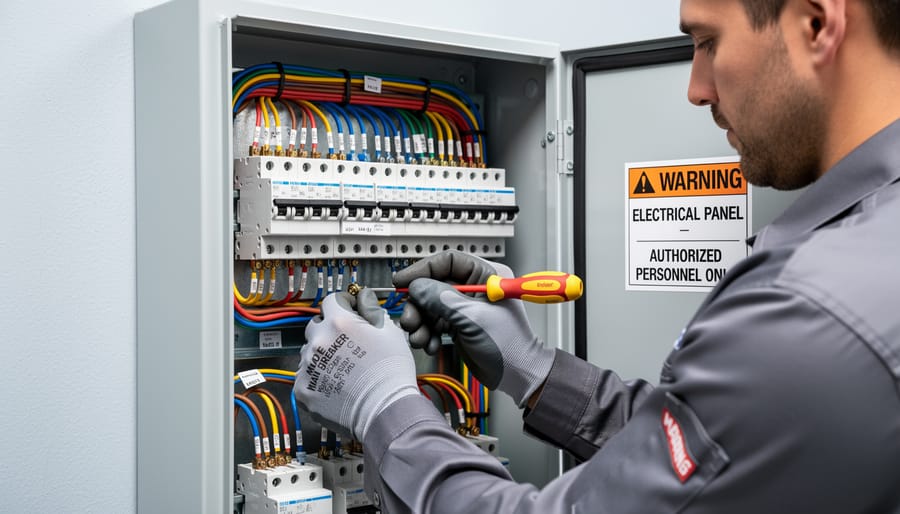
The 2026 National Electrical Code expansion of arc-fault circuit interrupter requirements reflects mounting evidence of DC arc incidents. Modern AFCIs now employ machine learning algorithms to distinguish hazardous arcs from normal switching events, reducing nuisance trips while improving detection sensitivity. Rapid shutdown systems, mandated for most new installations, automatically de-energize conductors beyond one foot of array penetration points within 30 seconds of activation, drastically reducing firefighter exposure to live circuits. However, retrofit obligations remain inconsistent across markets, leaving millions of older systems operating without these critical protections.
Structural and Weather-Related Concerns
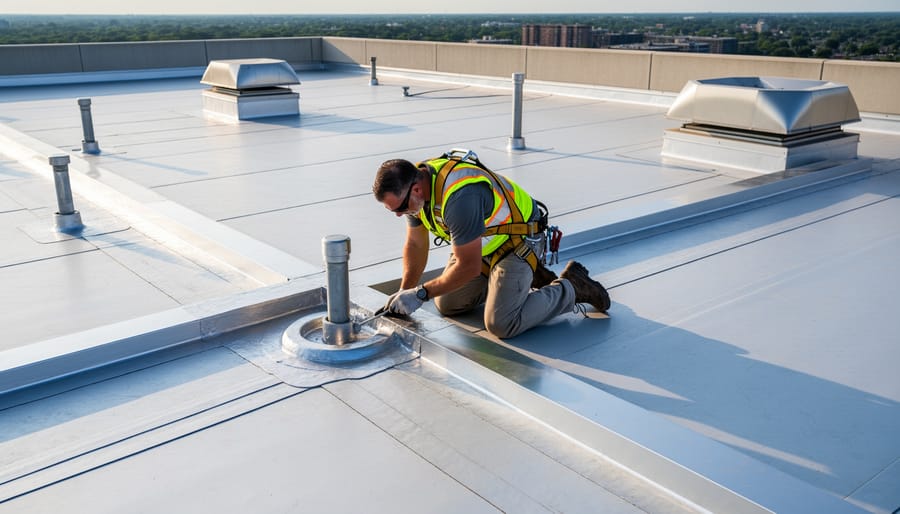
Roof-mounted solar arrays face constant assault from the elements, and structural failures can compromise both safety and performance. Penetration points where mounting hardware breaches the roof membrane represent the most common structural vulnerability. Even small gaps around lag bolts or flashing can channel water into attic spaces, leading to rot, mold growth, and electrical hazards as moisture reaches junction boxes. Industry data from 2026 indicates that improper waterproofing accounts for roughly 35% of warranty claims in the first five years after installation.
Wind events expose weaknesses in attachment methods. Hurricane-force gusts create uplift forces that can exceed 60 pounds per square foot, stressing mounting rails and roof anchors. Systems installed without engineer-stamped calculations or proper spacing between attachment points have failed catastrophically during severe weather. February 2026 storms across the U.S. Gulf Coast dislodged panels from over 200 homes, with investigators attributing most failures to inadequate fastener penetration into roof trusses rather than rafter boards alone.
Snow accumulation presents dual risks in northern climates. Static loads exceeding design thresholds can crack panel frames or bend mounting rails, while uneven melting creates ice dams that back water under shingles. Mounting hardware corrodes over time from galvanic reactions between dissimilar metals, particularly when aluminum rails contact steel roof fasteners without proper isolation. Annual inspections should verify torque specifications on all connections and check for rust, loose hardware, or sagging arrays that signal structural deterioration.
Battery Storage Safety Considerations
The integration of solar and storage systems in residential settings has introduced distinct thermal management challenges. Lithium-ion batteries can experience thermal runaway when internal temperatures exceed safe thresholds, triggering chain reactions that release flammable gases. This risk intensifies when battery enclosures lack proper ventilation or are installed in confined spaces where heat accumulates.
Modern battery management systems (BMS) monitor individual cell temperatures and automatically disconnect charging when anomalies occur. However, installation location matters enormously. Batteries mounted in unventilated garages or against exterior walls exposed to direct sunlight face elevated failure risks. Industry standards now specify minimum clearances and active cooling requirements for systems exceeding 10 kWh capacity.
Fire-rated enclosures and thermal barriers have become standard in 2026 installations, particularly for indoor mounting. Manufacturers recommend maintaining ambient temperatures below 25°C and ensuring airflow paths remain unobstructed. Regular inspections should check for cell swelling, unusual odours, or BMS alerts indicating voltage imbalances across the battery pack.
Best Practices for Maximizing Efficiency and Ensuring Safety
Advanced Monitoring and Diagnostic Technologies
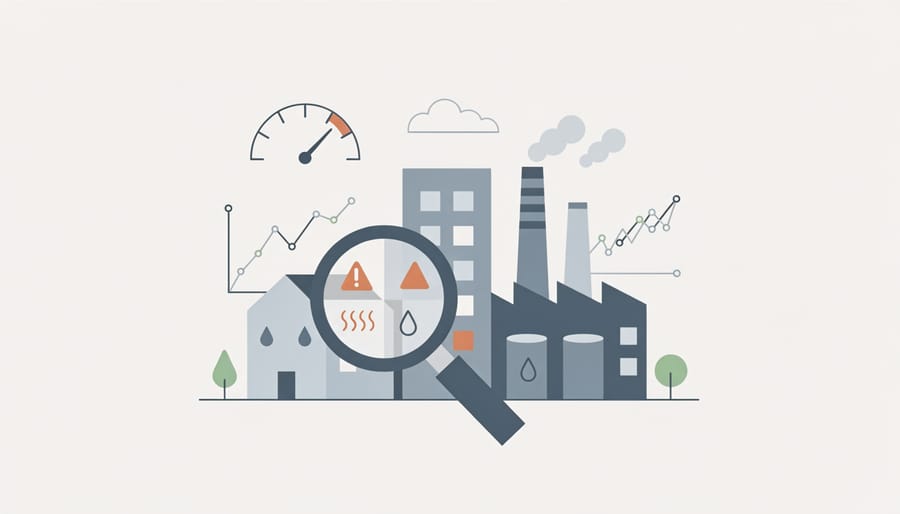
Smart monitoring systems have transformed how homeowners and installers detect problems before they compromise performance or create hazards. Modern solar installations in 2026 typically include real-time monitoring platforms that track panel-level production, flagging underperforming modules within hours rather than months. These systems measure voltage, current, and power output across individual panels or strings, identifying issues like partial shading, soiling accumulation, or failing bypass diodes that traditional inverter-level monitoring would miss.
Thermal imaging inspections have become a standard diagnostic tool for identifying hot spots, cracked cells, and loose connections that signal both efficiency losses and fire risks. Professional-grade infrared cameras detect temperature anomalies as small as five degrees Celsius, revealing defects invisible to visual inspection. Many installers now conduct annual thermal surveys using drone-mounted cameras, reducing inspection time while capturing comprehensive roof-level data across large residential arrays.
Predictive analytics platforms aggregate performance data from thousands of installations to establish baseline expectations for specific equipment, orientations, and regional conditions. Machine learning algorithms compare individual system performance against these benchmarks, generating alerts when degradation rates exceed normal aging patterns or when electrical signatures match known failure modes. This proactive approach extends to storage safety future considerations, with battery management systems monitoring cell voltages, temperatures, and charge cycles to prevent thermal events before they develop. Advanced systems integrate weather forecasts, historical production data, and equipment specifications to predict maintenance needs and optimize cleaning schedules based on actual soiling impact rather than arbitrary timelines.
Professional Certification and Quality Assurance
Selecting a certified installer represents the single most impactful decision homeowners make for long-term solar performance and safety. In 2026, industry-recognized credentials such as NABCEP (North American Board of Certified Energy Practitioners) certification signal mastery of current electrical codes, safety protocols, and installation best practices. Qualified installers conduct thorough site assessments, properly calculate solar needs based on actual consumption patterns, and design systems that comply with NEC 2023 requirements including rapid shutdown provisions and arc-fault protection. Verify installer credentials directly through certifying organizations rather than relying solely on company claims.
Warranty structures have evolved considerably, with comprehensive packages now covering panels (25-year performance guarantees at 85-87% output), inverters (10-25 years depending on technology), and workmanship (typically 10 years). Read warranty terms carefully: manufacturers often distinguish between product defects and performance degradation, with different thresholds triggering coverage. Document baseline system performance within the first 30 days to establish clear benchmarks for future claims.
Quality assurance extends beyond initial installation. Third-party inspections, available through organizations like the International Association of Certified Home Inspectors (InterNACHI) or local authorities having jurisdiction, verify code compliance, proper grounding, and structural adequacy. These inspections uncover issues missed during standard permitting processes, from inadequate roof attachments to undersized conduit. In markets with limited regulatory oversight, private inspection services provide essential verification that installations meet safety standards and manufacturer specifications for warranty validity.
Emerging Technologies and Innovation
Next-generation solar technologies are directly tackling the efficiency and safety challenges documented in earlier field studies. Bifacial panels, which capture light from both sides, demonstrate 10-15% higher energy yield in optimal installations while reducing thermal stress through improved heat dissipation. Integrated microinverters mounted directly on panels eliminate DC voltage risks across rooftops and enable panel-level monitoring that flags performance degradation immediately. Self-cleaning nanocoatings, now commercially available from multiple manufacturers, reduce soiling losses by up to 40% in dusty climates while minimizing maintenance requirements. Meanwhile, AI-driven monitoring platforms analyze production data in real time to predict component failures before they occur, transforming reactive maintenance into proactive system management. These innovations represent a fundamental shift from addressing problems after installation toward engineering solutions that prevent efficiency loss and safety incidents from the outset.
The long-term success of residential solar installations hinges on treating efficiency and safety as inseparable objectives rather than competing priorities. Field data from 2026 demonstrates that systems designed with rigorous safety protocols consistently outperform those where cost-cutting measures compromise electrical integrity or structural soundness. A properly grounded system with appropriate overcurrent protection not only prevents fires but also maintains stable voltage characteristics that preserve inverter longevity and energy conversion rates.
Professional standards continue to evolve in response to real-world failure patterns observed through global reporting networks. The integration of arc-fault detection, rapid shutdown capabilities, and advanced monitoring systems represents a maturation of the industry beyond basic compliance toward proactive risk management. Installers who maintain current certifications and follow updated electrical codes deliver measurably better outcomes across both performance metrics and safety incident rates.
Homeowner education remains the critical variable in system longevity. Owners who understand the indicators of degradation, perform regular visual inspections, and engage qualified technicians for periodic maintenance protect their investments while maximizing energy production. The proliferation of diagnostic tools in 2026 has made this easier, yet adoption still varies widely.
As renewable energy penetration increases globally, the standards set in residential solar will influence commercial and utility-scale practices. The innovations emerging from efficiency challenges and safety imperatives today establish benchmarks that define the sector’s trajectory, reinforcing solar energy’s role within comprehensive home energy systems that prioritize both performance and occupant protection.