
How Solar Panels Change Everything When You’re Selling an Inherited House
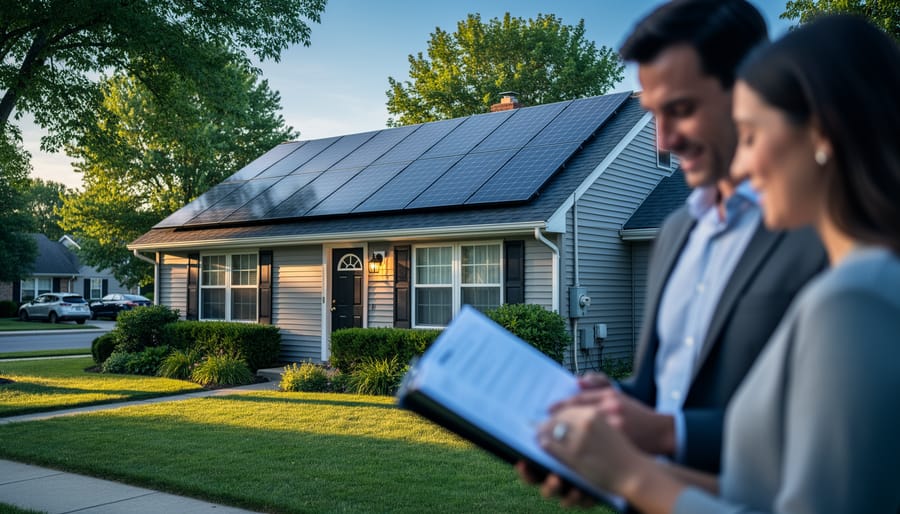
When you sell inherited house properties with solar installations, first determine whether the system is owned outright, leased, or financed through a power purchase agreement—this single factor will dictate your entire sales strategy and potential buyer pool. Contact the solar company immediately to obtain documentation showing ownership status, remaining contract obligations, and transferability requirements, as buyers routinely walk away from deals when these details surface unexpectedly during closing.
Prepare comprehensive solar system documentation including maintenance records, production data, warranty information, and installer certifications to position the property competitively as solar adoption increases nationwide and energy-efficient homes command premium pricing. If the system is leased or under a power purchase agreement, proactively negotiate with the solar company to simplify transfer terms or explore buyout options, as complex third-party agreements frequently deter conventional buyers and complicate financing approval.
The solar panel challenge represents both opportunity and obstacle in estate property sales. While owned systems typically enhance property value and attract environmentally conscious buyers, leased installations can extend transaction timelines by 30-60 days and eliminate cash buyers entirely. Understanding the legal framework governing solar equipment transfers, from UCC-1 fixture filings to utility interconnection agreements, proves essential for executors navigating probate requirements while maximizing estate value. This analysis examines the strategic considerations, regulatory requirements, and market dynamics that determine successful outcomes when solar technology intersects with inheritance property transactions.
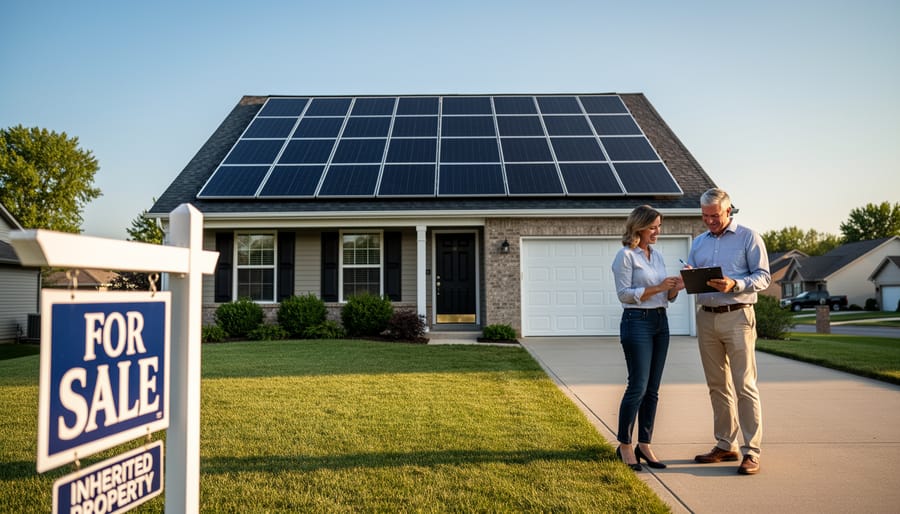
Understanding What You’ve Actually Inherited: Solar Ownership Models Explained
Outright Ownership: The Clean Transfer
When solar panels are fully paid and owned outright, they transfer seamlessly with the property title, creating the most straightforward transaction scenario for inherited properties. This ownership structure eliminates third-party lease complications and typically enhances property value, as buyers acquire a revenue-generating or cost-saving asset without ongoing payment obligations.
Market data indicates that owned solar installations can increase property values by 3-4% in markets with strong renewable energy adoption, though the premium varies by location and system age. Properties with newer systems often command higher premiums than those with older technology approaching end-of-life maintenance cycles.
Essential documentation includes the original purchase agreement, warranty information, interconnection agreements with the utility company, performance monitoring data, and maintenance records. Executors should also provide specifications regarding solar system sizing and output capacity, as this information influences buyer assessments.
Title companies require confirmation of ownership transfer through lien searches to verify no outstanding financing exists. Any existing solar renewable energy certificates or net metering agreements must be disclosed and properly transferred to new owners. Professional appraisers may need system production history to accurately assess the installation’s contribution to property value during estate settlement.
Financed Systems: Navigating Outstanding Loans
When a property owner with financed solar panels passes away, the outstanding loan becomes part of the estate’s liabilities. Solar loans typically don’t disappear upon death—the estate remains responsible for the debt unless specific contract provisions state otherwise. Estate executors face a critical decision: settle the loan before selling or transfer it to the buyer.
Lenders generally require notification of the property owner’s death and may accelerate payment terms depending on the loan agreement. Most solar financing contracts include provisions for estate settlement, though terms vary significantly between providers. Executors should immediately review the financing agreement to understand default clauses, prepayment penalties, and transferability conditions.
Three primary pathways exist for managing financed systems. First, the estate can pay off the loan using available funds, simplifying the sale by offering panels unencumbered by debt. Second, buyers may assume the loan if lender requirements are met, typically involving credit checks and income verification. Third, the solar company might offer refinancing options that facilitate transfer.
Financial institutions increasingly recognize that assumable solar loans can preserve property value and accelerate transactions. However, lenders retain approval authority over potential transferees, and qualification standards mirror those for original borrowers. Executors should obtain payoff statements early in the probate process to accurately assess estate obligations and inform pricing strategies.
Leased Systems and PPAs: The Complication Factor
Third-party ownership structures through leases or power purchase agreements introduce significant transactional complexity when selling inherited properties. These contracts, typically spanning 20-25 years, create binding obligations that transfer with property ownership rather than terminating at the original customer’s death.
The fundamental complication stems from buyer qualification requirements. Most solar lessors and PPA providers impose creditworthiness standards on prospective transferees, subjecting potential buyers to approval processes that can extend closing timelines by 30-60 days. Industry data indicates that approximately 15-20 percent of solar transfer applications face initial rejection due to insufficient credit scores or debt-to-income ratios, necessitating either buyer remediation or contract buyout negotiations.
Transfer approval processes require extensive documentation, including buyer financial statements, credit authorization forms, and signed assumption agreements. This administrative burden frequently surfaces as a negotiating obstacle, with qualified buyers often requesting price concessions to offset the contractual encumbrance they’re inheriting.
More critically, these agreements can function as de facto deal-breakers in competitive markets. Cash buyers and investors purchasing properties for renovation often categorically refuse to assume third-party solar contracts, viewing the monthly payment obligations and system maintenance responsibilities as incompatible with their acquisition strategies. For estate executors, this reality substantially narrows the qualified buyer pool and may necessitate contract buyout consideration before listing the property.
The Market Reality: How Solar Panels Affect Your Sale
Value Implications in Different Markets
Solar panel impact on property values demonstrates significant regional variation, with market premiums ranging from negligible to over 4% depending on location-specific factors. Recent transactional data from California markets shows inherited properties with fully-owned solar systems commanding 3.2-4.1% price premiums, while similar properties in lower-rate utility regions demonstrate minimal value differentiation. This disparity directly correlates with electricity cost structures and state-level renewable energy incentives.
Markets with elevated utility rates and favorable net metering policies consistently value solar installations more highly. In Hawaii and Massachusetts, where electricity costs exceed national averages by 60-80%, appraisers report more accurate solar valuations and buyer willingness to pay premiums. Conversely, regions with low electricity costs or unfavorable interconnection policies show buyer hesitancy, particularly regarding aging systems approaching warranty expiration.
Complications arise in markets where power purchase agreements remain prevalent. Properties encumbered with third-party ownership models face pricing challenges across all regions, with average discounts of 2-6% documented in markets from Arizona to New Jersey. The global renewable energy sector has observed this pattern across jurisdictions, underscoring the critical importance of ownership structure over regional market dynamics. Estate administrators should obtain current market comparables specific to their locale and ownership structure before establishing pricing expectations.
Buyer Pool Considerations
Solar installations significantly narrow the pool of prospective buyers, creating distinctive marketing challenges for inherited properties. Industry data indicates that properties with existing solar systems experience approximately 15-20% fewer initial showings compared to comparable homes without such infrastructure, primarily due to financing complications and transfer requirements.
Cash investors and property flippers represent particularly reluctant buyer segments. These stakeholders typically avoid solar-equipped properties because lease transfers extend closing timelines, complicate title work, and introduce ongoing financial obligations that reduce profit margins on quick resales. The due diligence required to verify system ownership, remaining contract terms, and performance guarantees adds layers of complexity these buyers actively circumvent.
To broaden market appeal, executors should proactively address solar complications before listing. Obtaining comprehensive documentation about system ownership, remaining lease obligations, and transferability conditions enables transparent disclosure. Properties with owned systems rather than leased arrangements consistently attract wider buyer interest. Consider buyout options for leased systems when estate assets permit, as this conversion eliminates financing barriers and appeals to conventional mortgage buyers who face fewer underwriting obstacles with owned equipment.
Legal and Financial Due Diligence Before Listing
Documentation and Contract Review
Comprehensive documentation review forms the foundation of any inherited solar property transaction. Estate executors should immediately locate the original solar installation contract, which identifies whether the system was purchased outright or installed through a lease or power purchase agreement. Equipment warranties, typically spanning 20-25 years for panels and 10-15 years for inverters, represent transferable value that prospective buyers will scrutinize during due diligence.
Performance monitoring data provides empirical evidence of system efficiency and return on investment. Request production records from the solar company or access web-based monitoring platforms using credentials found in estate documents. This historical generation data, measured in kilowatt-hours, substantiates energy cost savings claims and helps justify asking prices.
Coordination with the estate attorney proves essential for navigating ownership transfer protocols. Solar companies maintain specific assignment procedures for leased systems, requiring formal notification and creditworthiness assessments of potential buyers. Third-party financing agreements may include change-of-ownership clauses that impose transfer fees or require lender approval.
Contact the solar installation company directly to obtain complete system specifications, including panel wattage, inverter capacity, and interconnection agreements with the utility provider. These technical documents address buyer questions and facilitate smooth title transfer. Request copies of all maintenance records and any outstanding warranty claims to provide transparency and build purchaser confidence in the solar asset’s condition.
System Assessment and Disclosure Requirements
Professional system assessment protects both sellers and buyers from post-sale disputes. Commission a licensed solar contractor to evaluate panel condition, inverter functionality, wiring integrity, and mounting system soundness. This inspection documents current system performance against original specifications and identifies potential warranty issues. For leased or PPA systems, request the provider’s most recent maintenance records and performance data to verify compliance with contractual obligations.
Disclosure requirements vary significantly by jurisdiction but generally mandate transparency about solar panel ownership structure, existing liens, and system condition. Most states require sellers to disclose whether panels are owned, leased, or financed, along with outstanding payment obligations. California’s Natural Hazard Disclosure Statement, for instance, specifically addresses solar installations and their ownership status. Failure to disclose material facts about the solar system can trigger post-closing liability claims.
Document solar panel quality issues discovered during inspection, including any damage, degraded performance metrics, or warranty coverage gaps. Include copies of all solar-related contracts, warranties, and transfer documentation in the seller’s disclosure package. For financed systems, obtain payoff statements and lien release procedures from lenders. Estate representatives should work with real estate attorneys familiar with renewable energy transactions to ensure compliance with local disclosure laws and protect against personal liability arising from incomplete documentation.
Strategic Options for Different Scenarios
When to Pay Off Solar Debt Before Selling
Paying off solar debt before listing requires careful financial analysis. For owned systems with outstanding loans, clearing the balance eliminates title complications and typically accelerates closing timelines by 15-30 days, according to residential solar transaction data. The decision hinges on three factors: estate liquidity position, local market conditions, and buyer demographics.
In markets with high solar adoption rates, pre-paying debt may justify premium pricing of 3-5% above comparable properties. Conversely, estates with limited liquid assets should consider whether debt assumption appeals to qualified buyers, particularly in jurisdictions where solar financing transfers readily. The cost-benefit calculation must account for potential listing price reductions against immediate capital outlay requirements.
Estate administrators should obtain payoff quotes including prepayment penalties, then model scenarios comparing net proceeds from debt-free listings versus financed sales. For leased systems, buyout economics rarely favor estates unless removal costs exceed purchase prices. Professional appraisals quantifying solar value premiums inform optimal strategies, particularly when multiple heirs require equitable distribution or estate settlement deadlines constrain negotiation flexibility with prospective purchasers.
Negotiating Lease Buyouts
Lease buyouts present a viable pathway when selling an inherited property with solar panels under third-party ownership agreements. Financial viability depends on comparing the buyout cost against potential impacts on sale price and timeline. Solar companies typically calculate buyouts using the net present value of remaining lease payments, often discounted by 10-15 percent, though formulas vary by provider and contract terms.
When the remaining lease term is short or monthly payments are substantial, purchasing the system outright can streamline the transaction and expand the buyer pool. Conversely, if the buyout exceeds 70 percent of the system’s current market value or represents more than 2 percent of the home’s sale price, alternatives merit consideration.
Estate administrators facing prohibitive buyout costs should evaluate transfer provisions carefully. Some agreements allow assumption with minimal qualification requirements, while others impose stringent credit criteria. Negotiating temporary payment deferrals during the sale process or requesting buyer incentives from solar companies can provide additional flexibility. In markets with strong solar adoption rates, particularly California and northeastern states, maintaining existing agreements often proves more advantageous than pursuing costly buyouts that may not yield proportional returns.
Selling As-Is with Solar Agreements
Marketing inherited properties with existing solar agreements requires strategic disclosure and positioning. Transparency forms the foundation of successful as-is transactions—comprehensive listing materials should explicitly detail the solar ownership structure, remaining contract terms, monthly payments, and transfer requirements. Data from residential solar markets indicates properties with transferable leases or PPAs typically necessitate 3-8% pricing adjustments compared to owned systems, reflecting buyer assumption of ongoing obligations.
Targeting appropriate buyer segments proves essential. First-time homebuyers and environmentally conscious purchasers often value existing solar infrastructure, particularly when monthly electricity savings offset lease payments. Estate administrators should collaborate with real estate professionals experienced in solar-equipped properties who can effectively communicate financial implications and energy production data. Providing prospective buyers with complete documentation—including production history, maintenance records, and provider contact information—expedites due diligence and builds confidence. Properties in high-electricity-cost markets demonstrate stronger appeal, as solar agreements deliver measurable utility savings that justify contractual commitments extending 10-20 years beyond purchase.
Working with Real Estate Professionals Who Understand Solar
Standard real estate transactions often overlook the technical and contractual complexities inherent in solar panel installations, potentially exposing sellers to liability and diminishing property value. The specialized knowledge required extends beyond conventional market analysis into power purchase agreements, system ownership structures, and evolving appraisal methodologies.
Your real estate agent must demonstrate fluency in solar lease transfers, understand how different ownership models affect marketability, and accurately communicate system value propositions to potential buyers. This expertise proves particularly critical when navigating buyer hesitation surrounding assumed lease obligations or explaining net metering benefits that enhance property desirability. Agents lacking this background frequently misrepresent system ownership status or fail to highlight financial incentives, undermining negotiation leverage.
Appraisers require specialized training to properly value solar installations using the income capitalization approach or sales comparison adjustments specific to photovoltaic systems. Conventional appraisals routinely undervalue or completely overlook solar assets, particularly in markets with limited comparable sales data for solar-equipped properties.
The closing team must verify lien status, coordinate with solar companies for lease assignments or purchase agreements, and ensure proper documentation transfers occur. Title companies unfamiliar with Uniform Commercial Code financing statements related to solar equipment may miss critical encumbrances that complicate ownership transfer. Assembling professionals with demonstrated solar transaction experience significantly reduces delays, prevents valuation disputes, and protects your interests throughout the sale process.

The Renewable Energy Industry Perspective
The residential solar industry is actively addressing challenges associated with property transfers, recognizing that inherited homes with photovoltaic systems represent a growing market segment. Major solar financiers including Sunrun, Tesla Energy, and Vivint Solar have developed standardized transfer protocols that significantly reduce administrative friction for estate executors and heirs navigating property sales.
Industry data indicates approximately 15-20% of residential solar installations now encounter ownership changes within their first decade of operation, prompting systematic improvements in transfer documentation and assumption processes. The Solar Energy Industries Association has collaborated with real estate professionals to establish clearer guidelines for disclosure requirements and valuation methodologies, creating more predictable outcomes for inherited property transactions.
Leading solar finance companies have introduced dedicated transfer departments staffed by specialists trained in estate-related transfers, dramatically reducing processing times from several months to as few as three weeks in straightforward cases. This evolution reflects broader maturation within the sector, where infrastructure supporting renewable energy storage and distributed generation increasingly requires sophisticated asset management capabilities.
Emerging solutions include transferable warranties, simplified assumption applications, and digital platforms enabling real-time status tracking throughout the transfer process. Some installers now offer estate-transition services as standard product features, acknowledging that seamless transferability enhances overall system value and market acceptance. These industry initiatives demonstrate recognition that addressing inheritance scenarios strengthens consumer confidence in long-term solar investments while supporting continued residential market expansion.

Selling an inherited property with solar panels introduces distinct complexities that extend beyond traditional estate transactions, yet these challenges are entirely manageable with proper preparation and professional guidance. Executors who invest time in understanding the ownership structure of the solar installation, clarifying contractual obligations, and accurately communicating value propositions to potential buyers position themselves for successful outcomes. The key decision points center on determining whether to assume, transfer, or resolve existing solar agreements before listing the property, each pathway carrying specific implications for marketing strategy and closing timelines.
The renewable energy industry continues to evolve toward greater transaction transparency, with major installers developing streamlined transfer protocols and title companies building expertise in solar-equipped properties. This professional infrastructure development signals that transactions involving inherited homes with solar panels will become progressively more straightforward as market participants gain experience. For executors navigating these sales today, a methodical approach proves essential: secure comprehensive documentation early, engage real estate professionals familiar with solar transactions, obtain legal counsel for contract review, and maintain open communication with all stakeholders. This systematic methodology transforms apparent complexity into a series of manageable steps, ultimately protecting estate value while fulfilling fiduciary responsibilities to beneficiaries.